

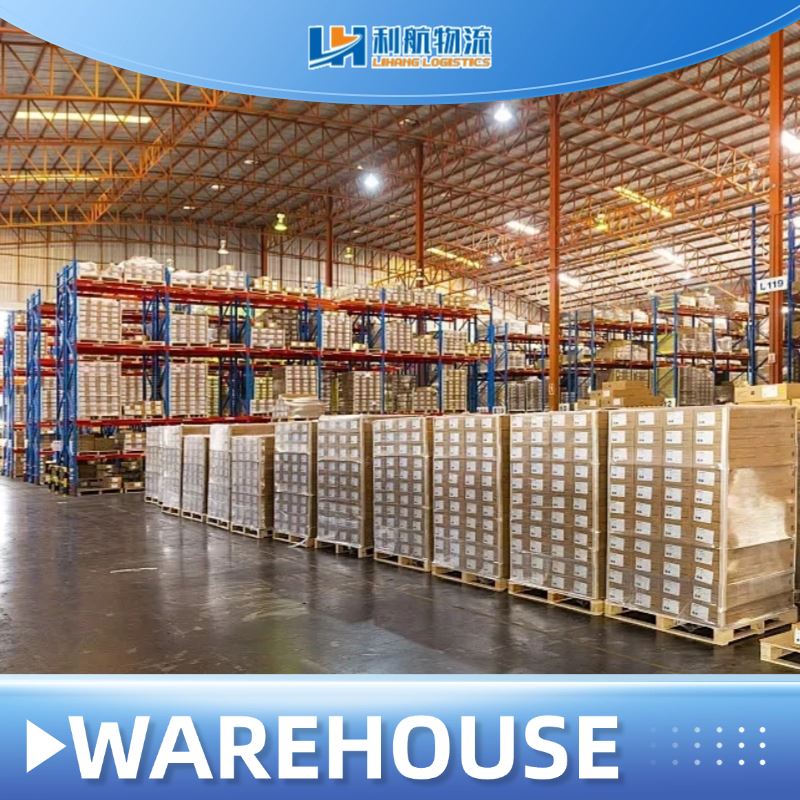
Commercial Cargo Customs Clearance is a regulatory compliance and entry-filing service designed to process commercial imports through border regulatory authorities (such as US CBP and EU national customs) in accordance with statutory requirements. The service encompasses electronic data interchange (EDI) filings, statutory duty and tax calculation, tariff classification, and agency release management across ocean, air, and land transport modes.
Service Scope
Import Entry Filings: Formal and informal entries, continuous and single-entry bond coordination, and Importer Security Filing (ISF) submissions.
Tariff Classification: Harmonized System (HS/HTS) code assignment based on WCO guidelines to determine applicable duty rates and trade agreement eligibility.
Other Government Agency (OGA) Clearances: Document coordination and filing for regulatory bodies including the FDA, EPA, FCC, USDA, and EU equivalent product safety directorates.
Fiscal Representation & Tax Management: Import VAT accounting, deferred payment schemes, and duty drawback coordination for North American and European trade corridors.
Shipping Options
Ocean Freight Clearance: FCL and LCL container processing at primary North American ports (e.g., Los Angeles, Long Beach, New York, Savannah) and European hubs (e.g., Rotterdam, Antwerp, Hamburg).
Air Cargo Clearance: Priority airport-of-entry processing for time-sensitive production components and high-value freight.
Cross-Border Land Transit: Automated Commercial Environment (ACE) and Automated Commercial Information (ACI) processing for US-Canada and US-Mexico border crossings.
Cargo Requirements
To secure electronic release prior to arrival, shipments require accurate baseline documentation:
Commercial Invoice: Must state explicit Incoterms, accurate material composition, itemized unit values, and country of origin.
Packing List: Detailed gross/net weights, dimensions, and package counts.
Transport Document: Bill of Lading (BOL) or Air Waybill (AWB).
Compliance Documentation: Applicable certificates of origin, laboratory test reports, or regulatory exemption forms.
Operational Execution & Error-Prevention Process
Our operational protocol applies structured compliance checks to minimize inspection rates and entry errors:
Pre-Arrival Data Audit: Validation of commercial invoice line items against bills of lading prior to vessel berth or aircraft touchdown.
Automated HS Verification: Database cross-checking to identify potential anti-dumping duties (ADD/CVD) and misclassification exposure.
Direct EDI Transmission: Real-time data linkage with customs infrastructure (ACE in the US, ICS2 in the EU) to capture immediate entry status updates.
Post-Clearance Audit: Systematic review of entry summaries (Form 7501 / Single Administrative Document) to maintain historical compliance records.
Transit Time & Cost Factors
Clearance Release Windows: Standard electronic releases are typically processed within 24 to 48 hours pre-arrival, subject to carrier manifest submission and lack of physical examination holds.
Cost Variables: Customs broker service fees, single-entry or continuous bond premiums, Merchandise Processing Fees (MPF), Harbor Maintenance Fees (HMF), and third-party warehouse exam fees.
Customs, Documentation & Compliance
Regulatory Frameworks: Operations governed by Title 19 of the US Code of Federal Regulations (19 CFR) and the European Union Union Customs Code (UCC).
Surety Bond Management: Facilitation of continuous customs bonds through licensed surety underwriters for registered importers of record.
Data Security: Encrypted transmission protocols meeting trade data privacy standards for proprietary commercial documents.
FAQ
Q: What documents are mandatory to initiate customs clearance?
A: A commercial invoice, packing list, bill of lading, and any product-specific regulatory certificates (such as FDA prior notice or FCC IDs).
Q: How are shipments subject to Other Government Agency (OGA) reviews managed?
A: Technical specialists interface directly with regulatory bodies prior to cargo arrival, submitting required product specifications and compliance documentation to reduce hold durations.
Q: Are duty drawback services available for exported merchandise?
A: Yes, drawback entry preparation is available for imported commercial goods that are subsequently exported or destroyed under customs supervision.
Request a Quote
Submit your operational parameters to receive a structured fee schedule and regulatory compliance assessment.
Required Input Data: Port/Airport of Entry, Transport Mode (Ocean, Air, Land), Importer of Record Jurisdiction, and Projected Annual Shipment Volume.