

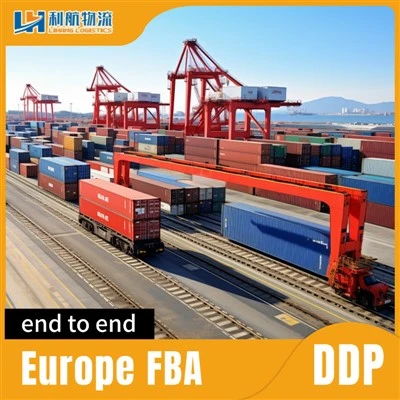
Reliable port drayage is critical to maintaining production schedules and avoiding demurrage at major Chinese container terminals (Shanghai, Ningbo-Zhoushan, Shenzhen, Qingdao). We provide direct pier-to-door and pier-to-warehouse drayage services, connecting marine terminals directly with manufacturing facilities or export consolidation warehouses. Operating a dedicated fleet of 50+ heavy-duty tractor units near tier-1 ports, we achieve a 98.5% on-time container pickup rate, mitigating transit bottlenecks through pre-pulled chassis programs and electronic port data integration.
Service Scope
Port Coverage: Full operational coverage at Shanghai (SHA), Ningbo (NGB), Shenzhen (SZX), Qingdao (TAO), and Tianjin (TSN).
Equipment Fleet: 20ft/40ft standard skeletal chassis, heavy-duty tri-axle chassis for overweight industrial machinery, and drop-and-hook trailer configurations.
Haulage Types: Import drayage (port to factory), export drayage (factory to port), transloading, and empty container yard returns.
Operational Fleet Capabilities: GPS-tracked tractor units, air-ride suspension options for sensitive industrial instruments, and certified twist-lock securement systems.
Shipping Options
Standard Drayage: Direct port pickup and delivery to destination within allowable free-time windows.
Pre-Pull Service: Container pulled from the terminal ahead of schedule and stored at our secure container depot to prevent port demurrage during peak congestion.
Transloading & Cross-Docking: Unloading containerized goods at port-adjacent warehouses for palletized long-haul domestic transit or consolidated air/LCL shipping.
Overweight / Out-of-Gauge Transport: Specialized low-bed chassis coordination for industrial equipment exceeding standard road weight limits.
Cargo Requirements
Weight Limits: Strict compliance with Chinese highway axle-load limits (e.g., max gross weight limits vary by highway class; typical 20ft container limit approx. 30,480 kg gross, subject to road permits for heavy machinery).
Container Specifications: ISO standard 20'DV, 40'DV, 40'HC, 45' containers, and flat-racks.
Documentation Pre-requisites: Valid Bill of Lading (B/L), Customs Release notice, Delivery Order (D/O), and Interchange Receipt (EIR).
Cargo Preparation: Proper internal bracing, dunnage, and blocking required for ocean transit survival and road safety standards.
Process
Booking & Data Exchange: Submit booking order, Customs release confirmation, and D/O via EDI or secure portal.
Driver & Equipment Dispatch: Asset allocation, route planning, and chassis assignment mapped 24 hours prior to vessel discharge.
Port Gate-In / Pickup: Terminal interchange, physical container inspection, and securement verification by certified drivers.
Transit & Tracking: Real-time GPS location monitoring and milestone updates transmitted directly to client dashboard.
Delivery & Proof: Unloading at facility, container return to designated empty depot, and signed Electronic Interchange Receipt (EIR) delivery.
Transit Time & Cost Factors
Transit Time: Port-to-factory delivery within a 150 km radius typically completed within 12 to 24 hours post-customs release.
Cost Drivers:
Distance between marine terminal and destination warehouse (km-based tariff).
Chassis type requirements (standard vs. tri-axle/heavy-duty).
Port congestion surcharges and peak-season terminal bottlenecks.
Detention and demurrage exposure windows.
Customs & Documentation
Clearance Coordination: Seamless interface with China Customs (Single Window system) to accelerate electronic release.
Mandatory Paperwork:
Master/House Bill of Lading.
Commercial Invoice and Packing List.
Special permits for restricted industrial machinery or hazardous materials (if applicable).
Compliance Checks: Verification of container seals against manifest data prior to leaving port security gates to prevent liability disputes.
Operational Control & Quality Assurance
Fleet Management: Average fleet age under 4 years, equipped with dual-channel dash cams and real-time telematics.
Driver Certification: Licensed Class A heavy-vehicle drivers with mandatory annual safety training and port security credentials.
Risk Mitigation: Comprehensive carrier liability insurance, cargo transit insurance options, and 24/7 dispatch emergency response protocols.
Data Security: ISO 27001-aligned digital logistics management systems protecting shipment data and commercial manifests.
FAQ
Q: How do you handle container demurrage if customs clearance is delayed?
A: We offer pre-pull solutions where containers are moved to our secure yard before free time expires, minimizing costly terminal demurrage charges.
Q: What are the restrictions for overweight containers in Ningbo and Shanghai?
A: Chinese highway regulations enforce strict bridge and axle weight limits. Containers exceeding standard road limits require specialized tri-axle chassis and pre-approved route permits.
Q: Can you support drop-and-hook operations at our facility?
A: Yes, subject to yard capacity and volume commitments, allowing your warehouse team to load/unload at their own pace.
Request a Quote
To receive an accurate drayage quotation for your upcoming shipments at Chinese ports, please provide:
Loading Port: (e.g., Shanghai, Ningbo, Shenzhen)
Destination Zip Code / City:
Container Type & Volume: (e.g., 2x40'HC per week)
Cargo Description & Gross Weight: